

By: Samia Zuber, Executive Director
I don’t know how it happened but I blinked and suddenly I have been in my role as Executive Director for two years and this year marks my fifth year with Hack the Hood. What a ride it’s been!
These past (almost) five years at Hack the Hood have been filled with growth, learning, challenge, and possibility. I have had the privilege of working alongside incredible leaders and a community that deeply believes in expanding opportunity for young people.
One of the people who shaped this journey early on was Tiffany Shumate. Tiffany had a clear understanding that technology was shifting quickly and that our programs needed to evolve with it. Her foresight about the growing importance of hard technical skills, particularly in data science, helped Hack the Hood pivot early. That early shift positioned our students to build stronger technical foundations and prepared our organization for where the tech industry was heading.
Today, I have the privilege of carrying that work forward. Over the past two years, I’ve had the opportunity to lead Hack the Hood through a period of stabilization and growth, strengthening our programs and expanding our vision for what equitable pathways into tech can look like for our communities. Together with an incredible team, we have reached some meaningful milestones.
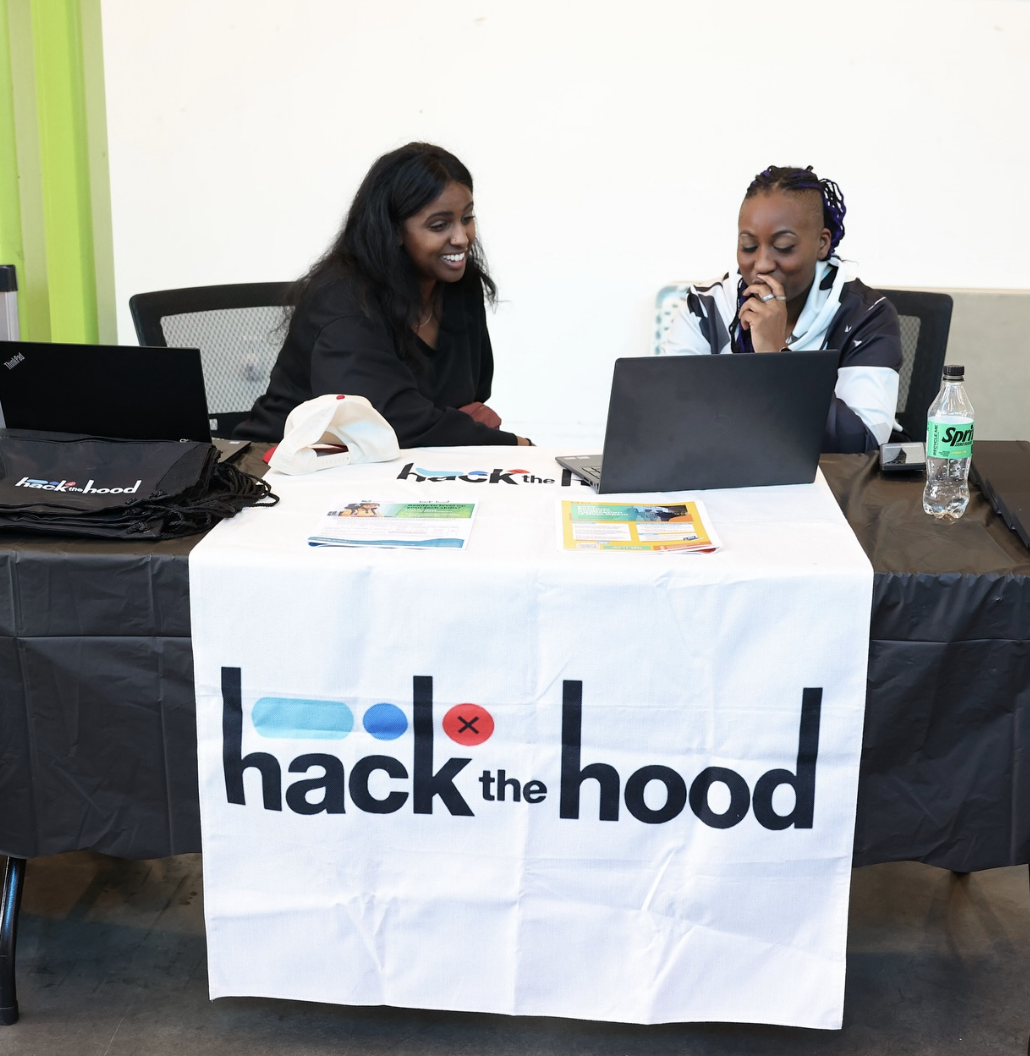
Oakland Tech Week 2025
Strengthening Career Pathways for Students
One of our major focuses has been building clearer and stronger career pathways for our students.
We developed a dual enrollment partnership with Laney College that allows high school students to earn five units of UC and CSU transferable college credit while participating in our programs. Through this opportunity, students gain access to laptops, stipends, career exploration, socio technical curriculum, identity development, and cohort support.
At the same time, we successfully registered our Build program as a pre apprenticeship program, creating stronger connections between our training programs and long term career opportunities. We also identified NPower as an apprenticeship partner, which now provides our learners with a pathway into their cybersecurity apprenticeship program.
These steps are about more than programming. They are about ensuring students leave our programs with real credentials, real experience, and real pathways forward.
Building the Future of Tech Education
Technology continues to evolve rapidly, and we know our programs must evolve with it.
This summer we will launch Hack the Hood’s first fully AI focused program. Through this program, students will learn foundational artificial intelligence concepts in Generative AI and be introduced to emerging Agentic AI technology. Learners will earn Google AI Essentials credentials and have the opportunity to earn Automation Anywhere certifications as well.
Our goal is not only to prepare students for jobs that exist today but to equip them with the skills to work alongside emerging technologies and shape the future of the industry.
At the organizational level, we are also beginning to integrate AI tools into our own operations. These tools will help increase our capacity, allowing us to better support and serve our students while also introducing students to AI tools they can use for career exploration, mentorship support, and professional development.
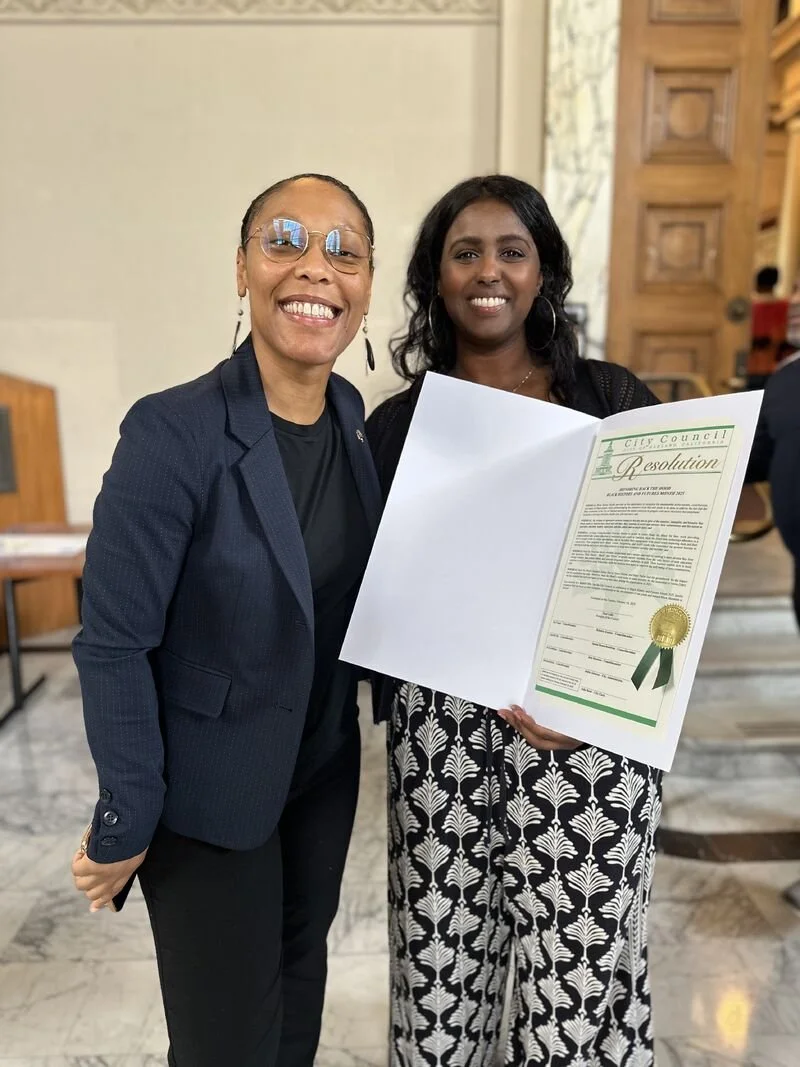
Hack the Hood receives the Black Changemakers Award from Oakland City Council
Strengthening the Organization
After receiving a transformational grant from MacKenzie Scott that helped stabilize the organization, our team moved quickly to think about the long term future of Hack the Hood.
Together, we developed our three year strategic plan focused on building stronger programs, strengthening our alumni community, and creating education and career pathway opportunities ensuring students leave our programs with tangible next steps and opportunities.
We also implemented new infrastructure to support our growth, including launching Salesforce across all of our programs to strengthen our data systems and student tracking. Through Stanford’s Evidence for Change Fellowship, we were able to evaluate our data needs and strengthen how we measure our impact. That work led to our first ever alumni survey report, helping us better understand where students go after Hack the Hood and how we can continue supporting them long after they complete our programs.
Expanding Our Ecosystem
We are also expanding how Hack the Hood shows up in communities.
This year we launched a new earned revenue model where we deliver Hack the Hood programs directly on school and community sites. Our first partnerships include Latitude High School and San Francisco Achievers as we are intentionally expanding our presence in San Francisco and Contra Costa County.
Through partnerships with the San Francisco Unified School District, we are looking to increase our focus on serving Black students in San Francisco who deserve greater access to technology education and opportunity. We are also continuing to grow our partnership with Laney College, where we deliver our Drive program and expand our dual enrollment opportunities.
Strengthening Leadership and Governance
Our board has also grown in exciting ways.
We introduced new board members who bring deep technical expertise and leadership, including Tony Gauda, our board chair who serves as VP Chief Architect of Cybersecurity, Fraud, and Risk at Intuit, Matias Blanco, Senior Director of Product Security at Okta, Sivan Levaton, former Vice President of SMASH.
We also welcomed back our co-founder, Susan Mernit, whose deep institutional knowledge continues to be a guiding force for the organization and celebrated the election of our board member, Patrice Berry, to the Oakland Unified School District Board.
And we continue to benefit from the leadership of long time board members who have been champions for tech education and workforce development opportunities since Hack the Hood’s early days.
This year, we are also launching our first Alumni Advisory Board to ensure our former students continue to shape the future of the organization.
Creating Economic Opportunity for Alumni
Another area of growth has been creating more opportunities for our alumni. We have begun employing alumni as teaching assistants and instructors, building a near peer learning model where students learn from people who share their lived experiences.
This model creates an ecosystem where our students can see themselves reflected in their instructors, not only in race, ethnicity, gender, or sexuality, but also in generation and life experience. It also allows Hack the Hood to serve as an employer for our alumni, creating early career opportunities at a time when entry level jobs in tech are becoming harder to access.
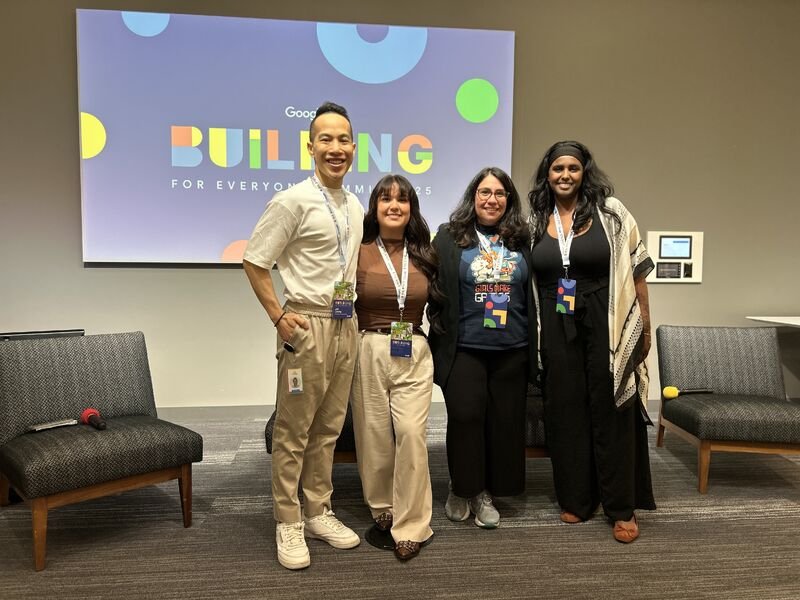
Google’s Building for Everyone Summit
Navigating Challenges
This journey has not been without its challenges. Like many nonprofits, we have navigated significant funding uncertainty. At one point, we lost a $600,000 dollar federal grant awarded under the Biden administration that was rescinded under the Trump administration. Moments like that test organizations but they also force clarity.
They push you to think creatively about sustainability, partnerships, and how to diversify revenue so the mission can continue despite fluctuations in the broader political or funding landscape.
Gratitude for the Ecosystem
We would not be here without the incredible ecosystem of support in the Bay Area. The education leaders, workforce development partners, community based organizations, and industry leaders who continue to invest their time, guidance, and belief in this work.
I have been incredibly fortunate to learn from so many people across this ecosystem. Their willingness to partner, collaborate, and support organizations like Hack the Hood makes everything we do possible.
Looking Ahead
There is still so much more to do. Technology is evolving faster than ever and artificial intelligence is transforming both the industry and the workforce. That means our programs and our organization must continue to grow and evolve alongside these changes.
If the past five years have taught me anything, it is that transformation is possible when communities come together around a shared commitment to opportunity. We have done a lot to be proud of but we are still just getting started.